

An independent editorial profile of the institution, its study model, research and the role a fully digital university can play in Europe’s technological future.
Digital-first rather than digitally supplemented
German UDS was not established as a campus university that subsequently moved classes online. Study organisation, learning platform, collaboration, support and international access were designed as digital from the outset. Its programmes are delivered fully online and in English.
The model also addresses people for whom a conventional campus is difficult to reach for professional, geographic or personal reasons. Digital access is therefore not an additional feature but the institution’s underlying architecture.
State-recognised and internationally oriented
In February 2025, the university received state recognition from Brandenburg’s Ministry of Science, Research and Culture. According to the university, this made it Europe’s first state-recognised university able to award a full German university degree exclusively through a digital model.
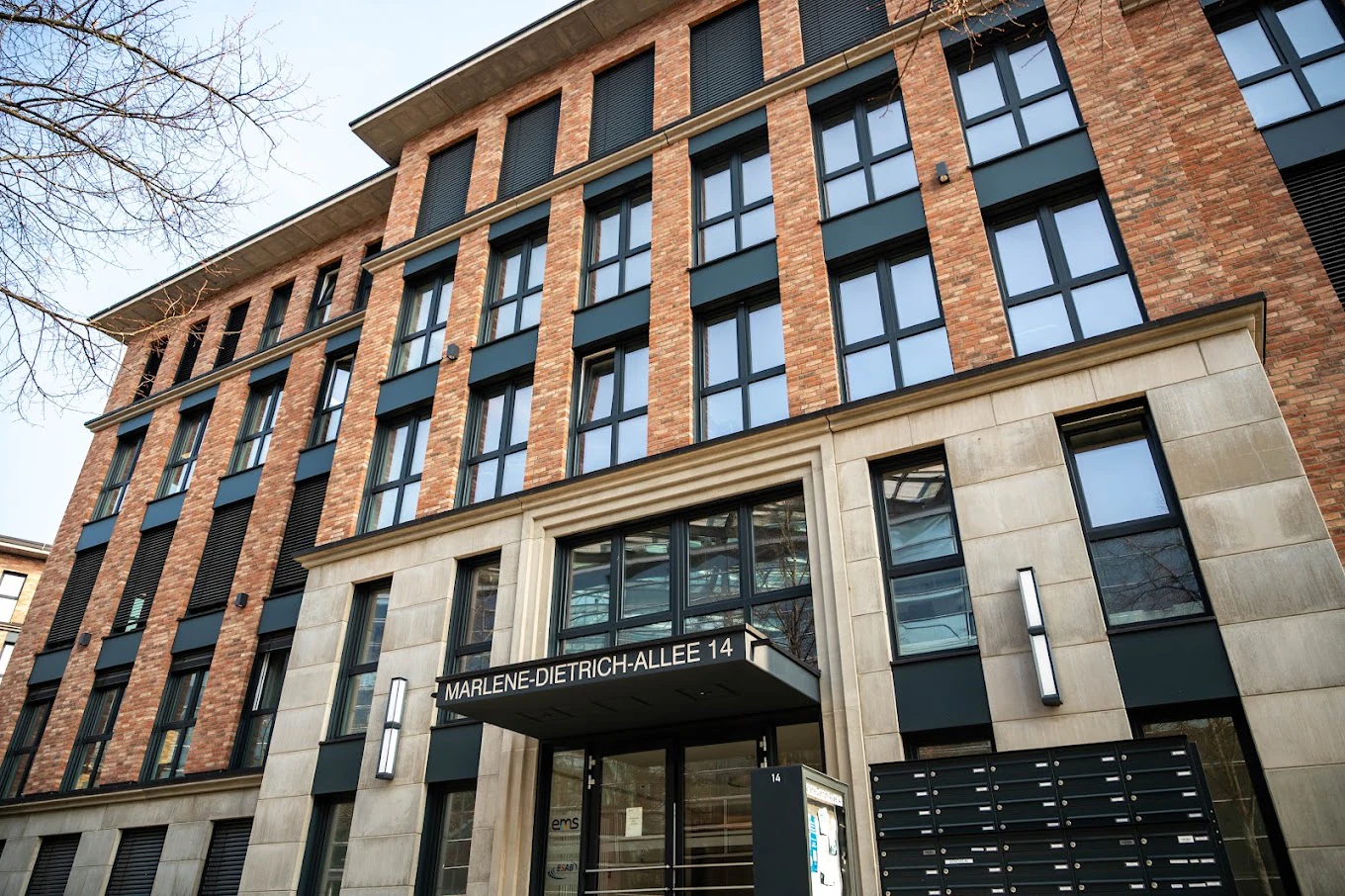
Academic operations began on 1 April 2025 in Potsdam-Babelsberg. The institution is based in Germany while its learning, teaching and research collaboration are explicitly designed for an international community.
- State recognition by the State of Brandenburg
- Full German university degrees through an online model
- English-language programmes for international students
- Digital access without a permanent on-campus requirement
Programmes for digital transformation
The current study portal lists master’s programmes including Applied AI, Cybersecurity, Digital Leadership, Advanced Digital Reality and Quantum Computing. These are complemented by multiple MBA programmes and focused micro-degrees carrying ECTS credits.
The academic scope combines technical depth with management, societal responsibility and practical transformation. It therefore addresses both specialist practitioners and people expected to lead digital change across organisations.
Research as part of the digital campus
The university describes six interdisciplinary research centres spanning digital transformation, educational technologies, artificial intelligence, cybersecurity, extended reality, and financial technology and law. This structure connects teaching with research groups and dedicated research schools for doctoral work.
A digital campus is therefore not limited to distributing course materials. It also encompasses academic community, research collaboration and new institutional forms for an internationally distributed scholarly environment.
A dated view of growth
At the first anniversary of academic operations in April 2026, German UDS reported more than 100 students from over 20 countries, 17 professors and a portfolio of four master’s and two MBA programmes. These figures remain explicitly tied to that reporting date.
The current About page now reports more than 20 professors and more than 20 student nationalities. The figures therefore document different stages in the growth of a young university rather than conflicting accounts.
Why this model matters to Europe
Digital sovereignty requires more than infrastructure and secure products. It also requires people who understand technology, assess it critically and shape it responsibly. Universities influence whether that knowledge becomes broadly accessible and internationally connected.
German UDS is a concrete attempt to connect German higher-education standards, global reach and lifelong learning in a digital institution. Its long-term scale will need to be judged through academic quality, research, learning outcomes and institutional resilience. That makes its development worth observing.