
01Implemented
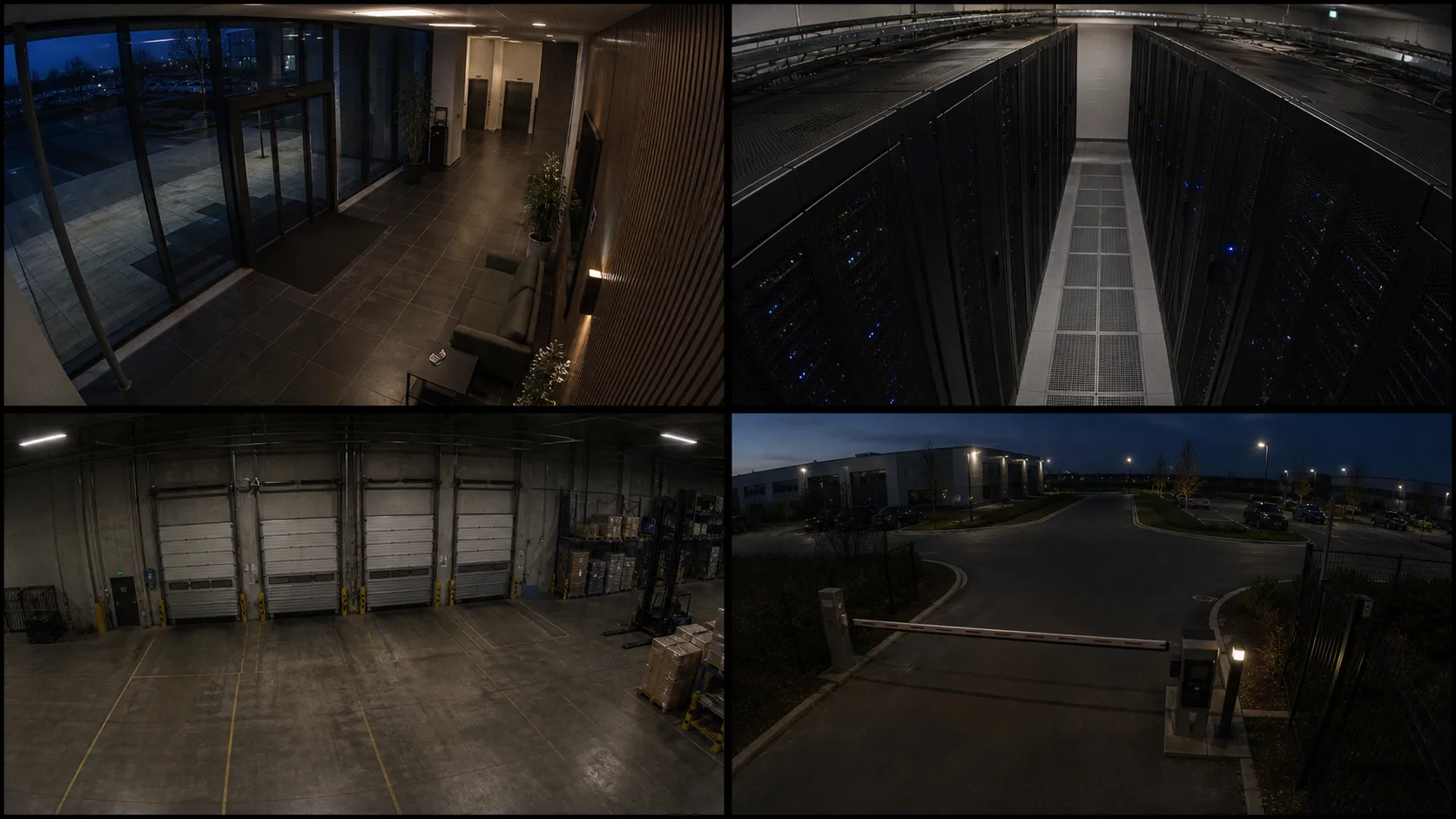
Camera wall and focus view
Automatic, 1, 4, 9 and 16-camera grids, staggered stream starts, main/sub-stream selection and a protected HD focus view.
VIGIL is VENTEX's local video-security line: multiple IP cameras, live views, control, recordings and system diagnostics in one controllable Windows interface—with no external video cloud required.
The software and its reviewed development state are real. A publicly accessible source repository, a project-wide open-source licence and public release distribution are not yet available in the reviewed state.
Many camera setups fragment into vendor apps, cloud accounts and disconnected live views. VIGIL combines generic RTSP/ONVIF functions and deliberately bounded Tapo controls in one local operating surface.
The current line is not a design study. It contains a native Windows application, reproducible packaging, hardware-independent regression tests and separate qualification on real cameras.
Automatic, 1, 4, 9 and 16-camera grids, staggered stream starts, main/sub-stream selection and a protected HD focus view.
Four load profiles respond to decoder CPU, render latency, frame drops, learned source FPS and stream instability without prematurely degrading focus streams.
RTSP live video, ONVIF PTZ and presets, plus firmware-aware Tapo functions with separated device control.
Parallel recording, schedules, a local library and safety-oriented recording guards.
Offline detection, performance diagnostics, an event log and sanitised diagnostic bundles for traceable troubleshooting.
The Windows build is reproducible. Code signing, automatic updates and formal public release distribution remain the next hardening steps.
VIGIL isolates failure-prone native decoder work from the UI process. The interface can respond to stream faults without mixing camera control and product state into a single monolith.
RTSP video, ONVIF commands and vendor-specific control are treated as separate interfaces.
FFmpeg/OpenCV runs outside the UI process; reconnect generations constrain stale worker state.
Triple-buffered BGR frames and versioned descriptors replace continuous JPEG transport.
Streams, grid, PTZ, navigation, diagnostics and workspace have clearly separated responsibilities.
Register cameras and DVR/NVR channels locally, configuring streams separately from supported controls.
Start streams in stages, learn real source rates and evaluate load only after a stable warm-up.
Focus a relevant camera in HD, zoom locally or execute permitted PTZ/preset actions.
Organise recordings locally and review health, performance and event signals together.
VIGIL reduces cloud dependencies, but it does not replace network segmentation or secure camera configuration. The site therefore states what the application controls—and what remains outside its boundary.
Camera passwords are stored through Windows Credential Manager and not persisted as part of RTSP URLs.
PTZ, spotlight and other functions remain model- and firmware-dependent; vendor paths are not presented as universal.
The application does not automatically control VLANs, camera firmware, routers or physical access to the recording system.
An announced open-source direction is not the same as a public repository with a granted licence. That boundary remains visible until source and licence publication.
This status is based on the reviewed 2.10.0 source archive and its release, build and test documentation.
Short answers with the same status and claim boundaries as the technical product state.
VIGIL is intended as free open-source technology. The reviewed state still lacks a publicly accessible source repository, a project-wide open-source licence and an officially distributed release.
No. The fundamental path is designed around camera, local network and VIGIL. Vendor-dependent camera functions or remote access to the local network may have separate external dependencies.
The core supports RTSP sources plus ONVIF and Tapo integrations. Exact capabilities depend on model, firmware, network and exposed streams.
The current site claims neither certification nor blanket suitability for regulated or evidentiary video systems. That decision requires a separate requirements and operational review.